

For years, the telecom industry has worked towards networks that can monitor, understand and optimise themselves. Communications Service Providers (CSPs) have used automation, machine learning and service assurance to improve efficiency and accelerate problem resolution.
Yet much of today’s automation remains reactive and rule based. Operations depend heavily on human expertise, while data is fragmented across network domains, vendors and systems.
Agentic AI could change this.
Intelligent software agents can understand context, plan activities, collaborate and take controlled action. They offer CSPs a practical pathway towards Autonomous Networks Level 4 (AN L4), moving beyond detection towards predicting, diagnosing and resolving problems with less human intervention.
From rule-based automation to intelligent autonomy
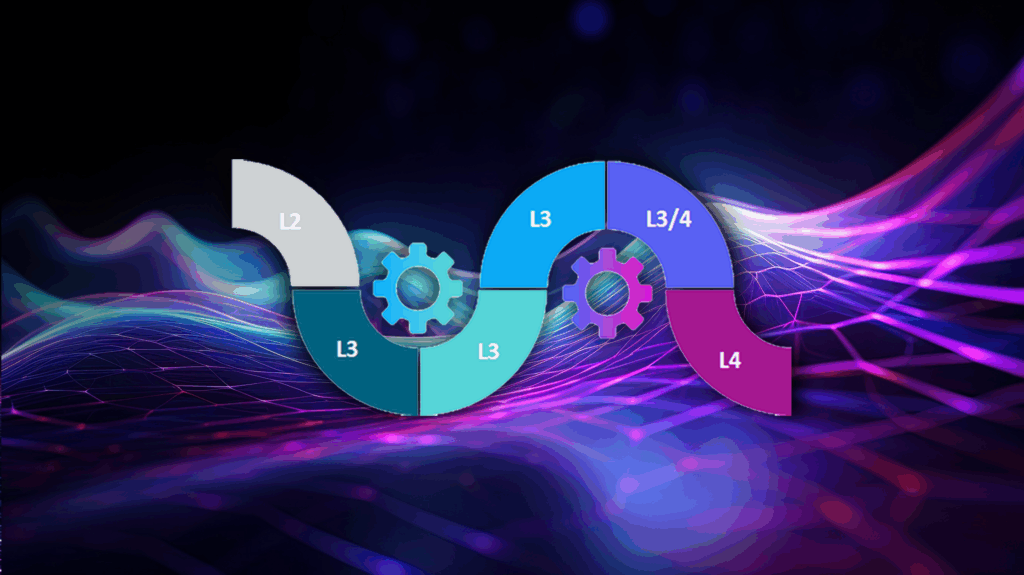
Most CSPs operate between Autonomous Networks Levels 2 and 3. Automation has improved fault management, performance management and service assurance, but often relies on predefined rules and workflows.
Agentic AI introduces a different approach. Agents interpret operational events, determine what needs to happen next, coordinate activities and adapt as conditions change.
This enables a shift towards predictive operations, where agents continuously sense, analyse and act on network conditions. CSPs can progress incrementally, converting individual use cases to Agentic AI-driven automation and increasing autonomy over time.
Autonomy depends on trusted network context
Agentic AI is only as reliable as the information available to it.
Telecom networks generate alarms, KPIs, service data, topology information, configuration data, traces and operational knowledge. Collecting this information is not enough: agents must understand its meaning and relationships.
A common, AI-ready data foundation is essential. Governed data products combine multi-domain and multi-vendor information, while common ontologies and semantics support consistent interpretation. Topology connects network elements, services and customers. Operational knowledge supplies the domain expertise and remediation processes needed to determine the next action.
Closing the remediation loop
The industry has become effective at detecting problems, but detection is only the beginning.
Autonomous networks must close the remediation loop: sense, analyse, decide, act and validate.
Today, diagnosis and recovery can require engineers to move between tools, analyse evidence and coordinate teams. Agentic AI can automate more of this process.
Specialised agents can collaborate: one detects anomalies, another correlates performance information, another investigates faults and a domain-specific agent conducts root cause analysis. This mirrors experienced operations teams while allowing investigations to happen at machine speed.
Multi-agent collaboration across vendors
Telecom networks are multi-vendor and multi-domain. No single supplier is likely to provide every agent required for autonomous operations.
Open protocols enable agents from different providers to exchange context, delegate tasks and coordinate actions. Model Context Protocol (MCP) enables access to external tools and data, while Agent-to-Agent (A2A) communication supports collaboration between specialised agents.
Standardising these interactions could replace lengthy custom integrations with reusable connections, extending autonomy across complex environments.
Agentic AI in action
A demonstration between Mycom and Mavenir, running on AWS infrastructure, shows how this works.
Mycom AInsights detects voice service degradation, with mobile-originated call setup success falling from approximately 92% to 66%.
A supervisory agent plans the investigation and coordinates performance and fault management agents. These correlate the degradation with signalling KPIs and a major CPU utilisation alarm before escalating to Mavenir through A2A communication.
Mavenir’s IMS agents isolate the issue to a faulty TAS SIP routing pod. A human-in-the-loop guardrail generates an approval ticket before the pod is isolated, drained and restarted.
The agents then validate remediation. Call setup success recovers to approximately 93.4%, the incident closes and the behavioural pattern is captured for future investigations.
The significance extends beyond identifying a fault. Specialised agents collaborated across technology boundaries to detect, investigate, remediate and validate a problem through a complete operational loop.
Autonomy with trust
Greater autonomy changes where human expertise is applied.
As agents progress from analysis to recommending and executing actions, governance becomes critical. CSPs must define what information agents can access, which actions they are authorised to perform, when human approval is required and how decisions can be audited.
Every autonomous action should be observable and traceable, supported by guardrails, security controls and authority boundaries.
The objective is autonomy with trust.
A practical path towards Level 4 autonomy
Level 4 will emerge use case by use case. CSPs can begin where automation delivers measurable value, including anomaly detection, root cause analysis and closed-loop remediation. They can then connect specialised agents, expand their data foundation and introduce additional workflows.
Each use case provides an opportunity to validate outcomes, refine operational guardrails and build confidence before expanding autonomy. This incremental approach connects technology investment to improvements while keeping human oversight in place.
Production-scale autonomy also requires a balance of technologies. LLMs support reasoning, while established machine learning models remain effective for anomaly detection, forecasting and fault correlation. The goal is to apply the right intelligence to the right task, maintaining measurable return on investment.
Success depends on combining agents with trusted telecom data, domain expertise, open protocols, cloud-scale infrastructure and strong governance. Together, these form an ecosystem of agents, models, tools and operational systems connected through common interfaces and shared context.
For CSPs, the opportunity is to start building that ecosystem now and progressively close more of the operational loop.
That is how Agentic AI can move Autonomous Networks Level 4 from industry ambition towards operational reality.
This thought leadership blog is an AI-supported summary of Mycom’s webinar, Leveraging Agentic AI to Power Network Autonomy, featuring experts from Mycom, Mavenir and Amazon Web Services (AWS).
To see the full recording of the webinar, click here.